Distributed LoRA Fine-Tuning Pipelines with Ray Train and DeepSpeed ZeRO-2
Train custom foundation model adaptors efficiently on multi-GPU server clusters with automated checkpoint validation and memory-balanced sharding.
Netbay Developer Relations
Netbay Engineering
On this page
Fine-tuning foundation models for proprietary enterprise domains is essential for high accuracy. While full parameter fine-tuning of 70-billion-parameter models requires clusters of H100 servers costing thousands of dollars per day, Parameter-Efficient Fine-Tuning (PEFT) using Low-Rank Adaptation (LoRA) freezes the base model and trains compact rank-decomposition matrices.
By combining LoRA with Ray Train and DeepSpeed ZeRO-2, engineering teams can distribute model training across multiple cost-effective GPU VPS nodes, reducing training time from days to hours while avoiding out-of-memory (OOM) crashes.
DeepSpeed ZeRO-2 & Ray Train Synergy
When training large models across distributed workers:
- Base Model Freezing: Base weights remain static in FP16 precision across all worker GPUs.
- ZeRO-2 Optimizer State Sharding: DeepSpeed partitions Adam optimizer states and gradients across all GPUs rather than replicating them, freeing up gigabytes of VRAM.
- Ray Train Orchestration: Automatically handles cluster discovery, fault-tolerant worker restarts, and gradient synchronization across high-speed interconnects.
Python Fine-Tuning Script with Ray Train
Below is a production training script leveraging Ray Train and HuggingFace PEFT:
import ray
from ray.train.torch import TorchTrainer, TorchConfig
from ray.train import ScalingConfig
from peft import LoraConfig, get_peft_model
from transformers import AutoModelForCausalLM, AutoTokenizer, TrainingArguments

def train_func(config):
    model_id = "meta-llama/Llama-3.3-70B-Instruct"
    tokenizer = AutoTokenizer.from_pretrained(model_id)

    # Configure LoRA Rank and Target Modules
    lora_config = LoraConfig(
        r=16,
        lora_alpha=32,
        target_modules=["q_proj", "v_proj", "k_proj", "o_proj"],
        lora_dropout=0.05,
        bias="none",
        task_type="CAUSAL_LM"
    )

    base_model = AutoModelForCausalLM.from_pretrained(
        model_id,
        torch_dtype="float16",
        device_map="auto"
    )
    model = get_peft_model(base_model, lora_config)
    model.print_trainable_parameters()

    # Training execution via HuggingFace Trainer under Ray
    print("Beginning distributed LoRA training step...")

def main():
    ray.init()
    trainer = TorchTrainer(
        train_func,
        scaling_config=ScalingConfig(num_workers=4, use_gpu=True),
        torch_config=TorchConfig(backend="nccl")
    )
    results = trainer.fit()
    print("Training successfully completed:", results)

if __name__ == "__main__":
    main()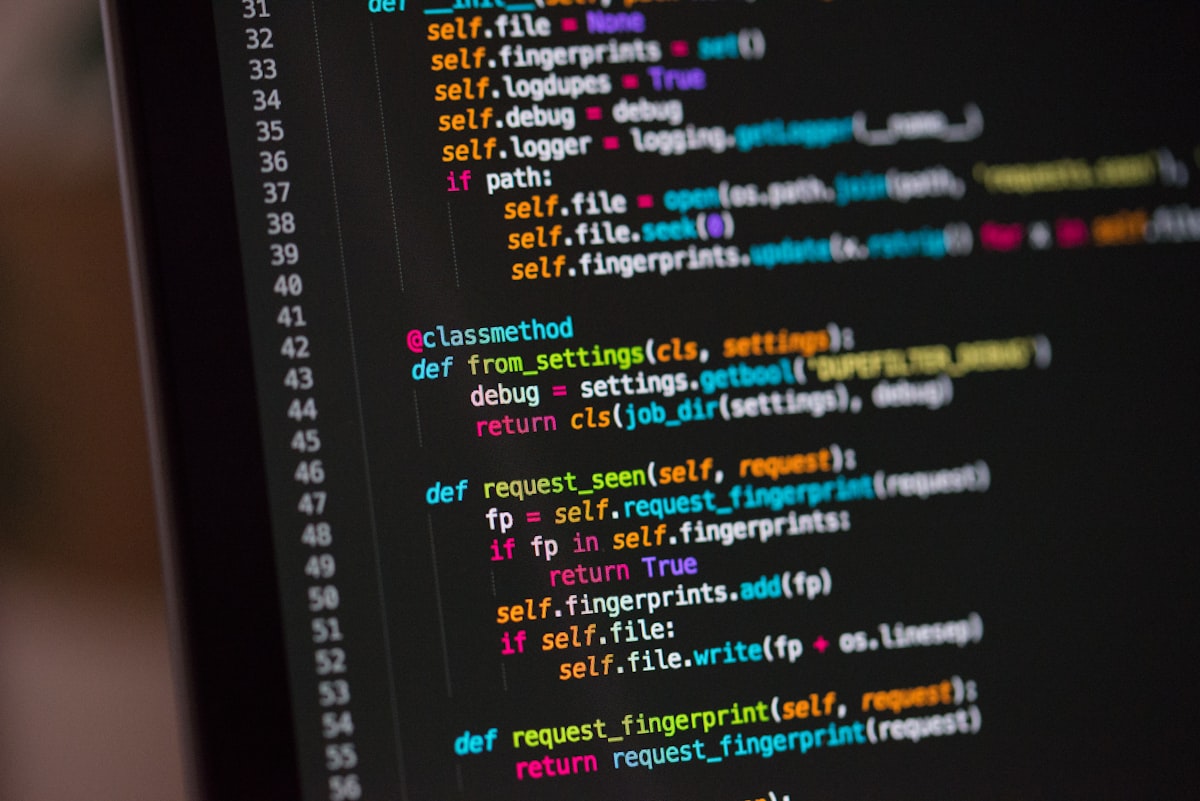
Video Guide on Neural Network Mathematics
Deepen your understanding of backpropagation, gradient descent, and neural network optimization:
Distributed LoRA fine-tuning provides enterprise teams with specialized domain intelligence without the prohibitive expense of full foundation model training.
Spin up high-performance multi-GPU and high-CPU VPS instances on Netbay Cloud at netbayhosts.in.
Keep reading
Follow along on a real VPS
Deploy Linux in under 60 seconds
These guides are written against Ubuntu, Debian, and RHEL-family images — the same ones on NetBay.
Deploy an instance